A note from the founder
I built Rhythmos because every other productivity app made me feel like I was failing.
Most productivity apps work fine on a good day. The problem is the other days. The day a meeting runs ninety minutes long. The day the bus is late. The day you woke up underwater and the morning routine you set up so carefully feels, by 10am, like an accusation. I made Rhythmos because I have those days a lot, and I needed an app that handled them without telling me I was broken.
01 — The search
More than a decade of trying everything.
-
Paper journals
I started at 18 and kept it up for years. Every routine had to be written out again every day. Anything I forgot to carry over just disappeared. Paper is bulky to carry, and it can’t remind you, schedule anything, or show you how you’re doing.
-
Bigger paper systems
So I got more organized: elaborate methods, printed templates, a whole roll-top desk. But once a computer is printing your templates, you might as well use the computer.
-
Text files
Plain text files on my phone. Over time they grew into Markdown checklists I could tick on and off.
-
Todoist
A real step up. It did everything paper couldn’t. I used it for years and checked off 25,202 tasks. But slowly it sank in that it wasn’t built for a brain like mine.
-
The patchwork
Markdown, Todoist, and a PC app I wrote to manage the Markdown, all stitched together. Each piece did part of what I needed, carried a lot I didn’t, and none of them talked to each other. When I dropped Todoist for my own app, I could only plan while sitting at my PC.
Making elaborate lists was always easy for me. What I never had was a simple way back when one thing fell off the rails.
-
Android prototypes
My first Android prototype finally took the whole system mobile. It still missed the point. I didn’t need another list that made me feel guilty when I got distracted or disappeared into a hyperfixation. I needed one that got me back on track: no guilt, as little input from me as possible, and still built around my actual day. The first two builds were just for me.
-
Rhythmos
About eight months ago I started the build you’re joining the waitlist for. It’s the closest yet to what’s been in my head all these years.
The plan will break. The recovery is the product.
02 — The people
Two of us, one kitchen table.

Brad Gregersen
Founder · Design · Engineering
Emily Gregersen
Alpha tester · Lived experience
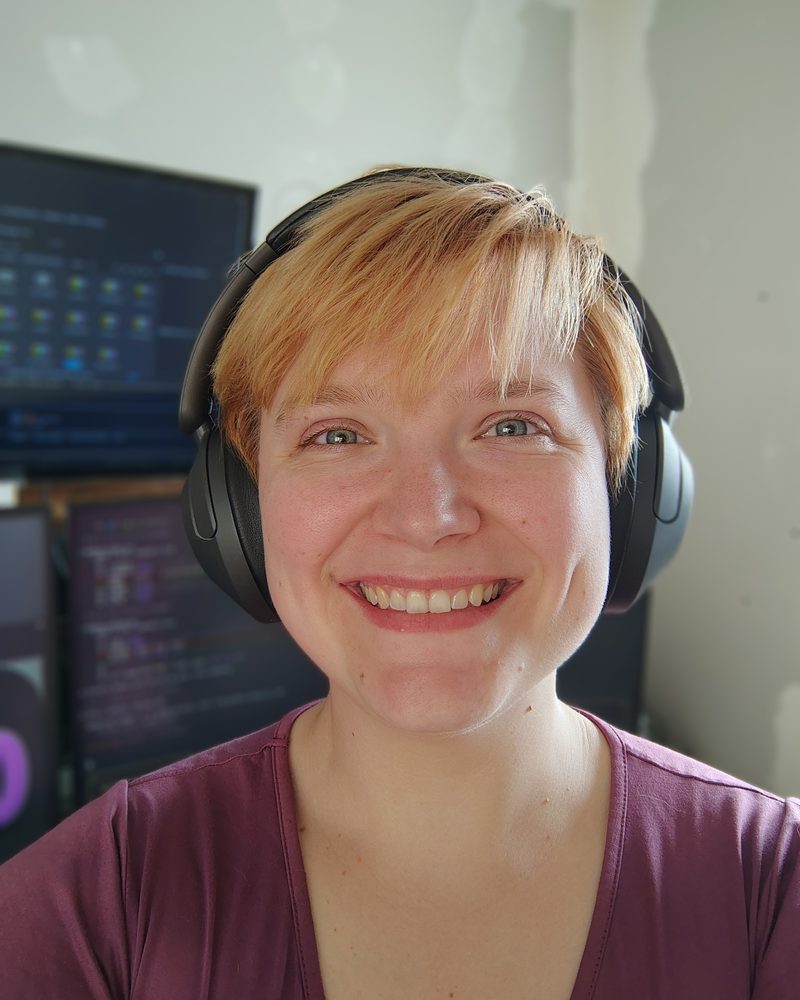
I’m Brad. I have ADHD and Autism, and I do the design and engineering. Emily is my wife. She has ADHD too, and her job is to tell me when something I built is wrong. She does that a lot, and Rhythmos is better for every round of it.
Everything in the app has been sanded down by two real lives, not a focus group. Things that look great in a Figma file but fall apart at 4pm on a Wednesday don’t survive Emily. Things that survive her, ship.
03 — Built with you
Built with the community, not just for it.
Neurodivergent brains aren’t all the same. What saves my day might just be noise in yours. That’s why Rhythmos is made of modules, pieces you turn on or off until it fits the way your brain works.
The community knows what it needs. My job is to listen and build what you ask for. I take that input seriously, and what keeps coming up is what gets built next.
Rhythmos is self-funded, so there are no investors deciding what gets built. Neurodivergent people’s needs come first, not financial projections.
Tell me what you need: support@getrhythmos.com
04 — The principles
Four rules behind every screen.
Each one is a fight against a default that the rest of the productivity world takes for granted.
- 01
No red, anywhere.
Being behind isn’t an emergency. The whole app is built to avoid shame-coded urgency. There is no warning red in the interface, on purpose. The website inherits the same rule.
- 02
Recovery comes first.
Plans break. Rhythmos rebuilds them so you don’t have to. Getting back on track is the most important thing in the product, not an afterthought tucked behind a settings menu.
- 03
Tailored to neurodivergent brains.
Every feature is tested against a single question: does this help a neurodivergent brain at 4pm on a hard day? If it doesn’t help that person, on that day, it doesn’t ship.
- 04
Celebrate, don’t punish.
Most apps weaponize streaks. Break a sixty-day chain and you feel it for a week. The points, streaks, and small wins in Rhythmos mark that you showed up and did what you could. A missed day starts a fresh streak, with no ‘streak lost’ message. Dopamine, not pressure.
05 — Where this is going
The app is the front door.
Rhythmos starts as an Android app, because that’s where my day lives. But the app isn’t the product. The product is the system behind it: one place that knows your tasks, your goals and how your day is actually going. Over time, that system will do more of the work for you, so you spend less time managing a planner and more time on the things that matter.
I’m obsessed with productivity, and I won’t stop until Rhythmos helps millions of neurodivergent people get the important things in their lives done.
If any of this sounds like the tool you’ve been waiting for, join the waitlist.
Launch news and the occasional real update, never more than once a month. No spam, no list-sharing.